
Tony Kozycki
October 20, 2026 · Newsletter
Who’s Paying for Georgia’s Data Center Boom?
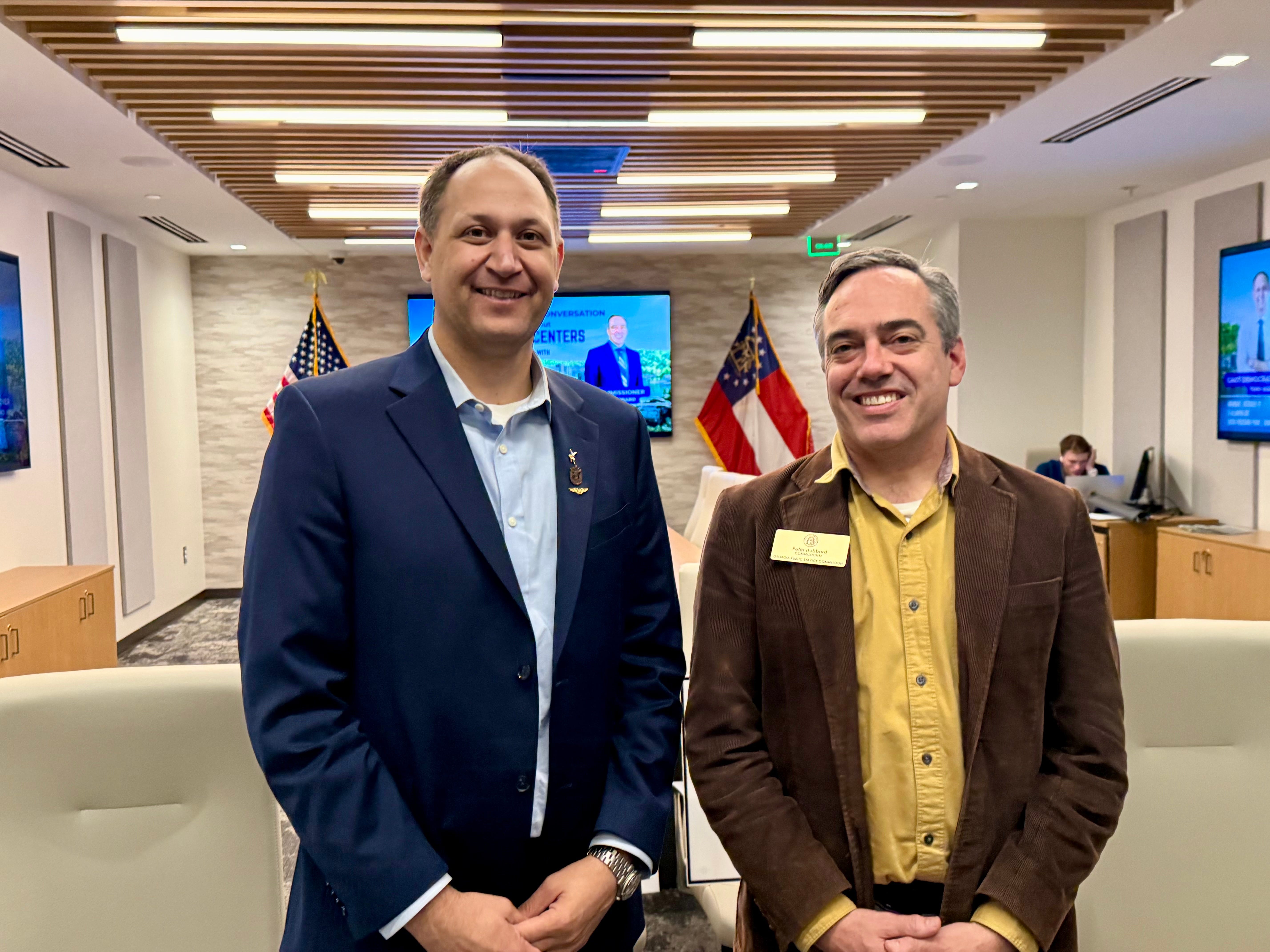
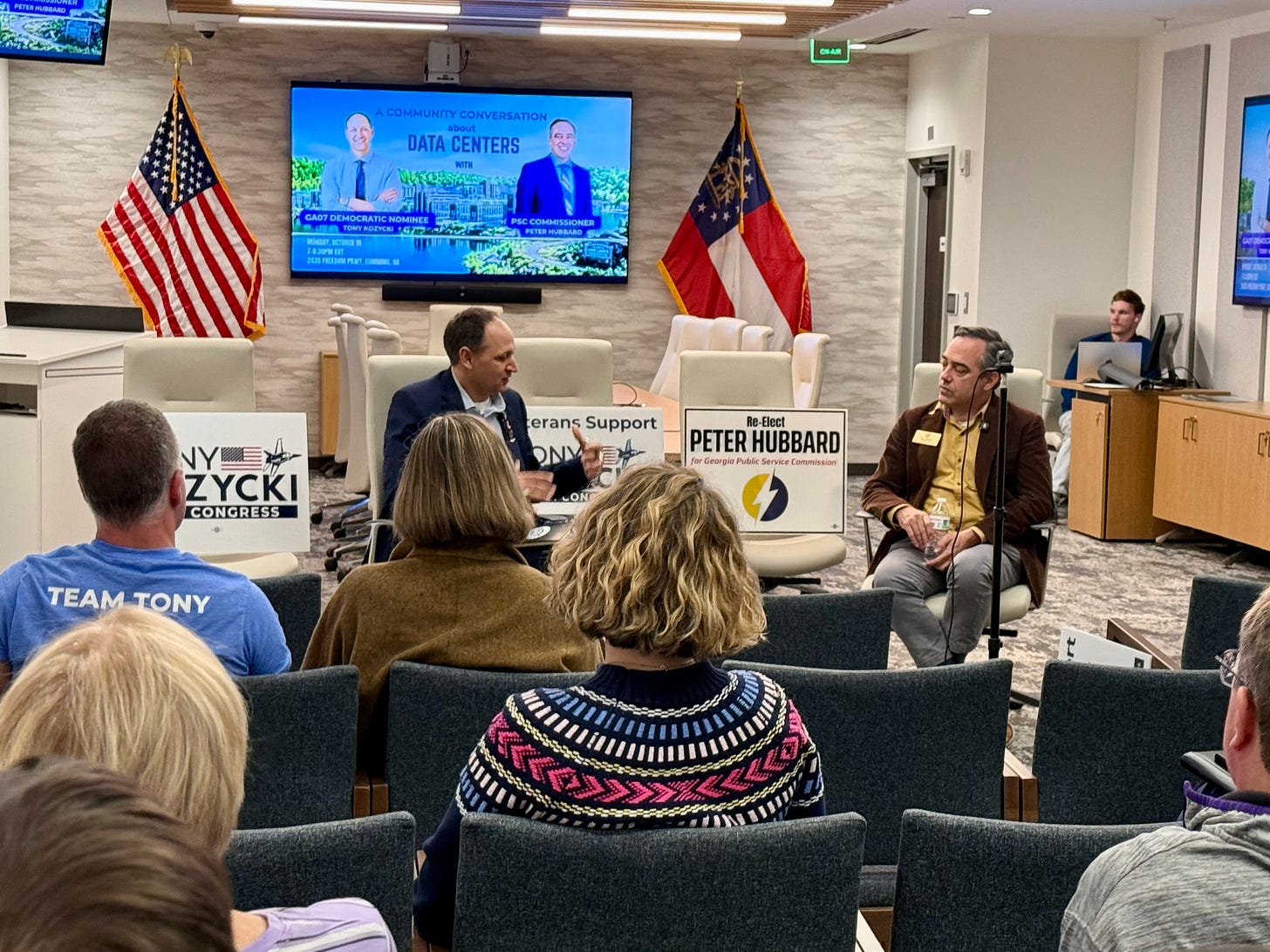
Last night, I hosted a Community Conversation on data centers with Public Service Commissioner Peter Hubbard.
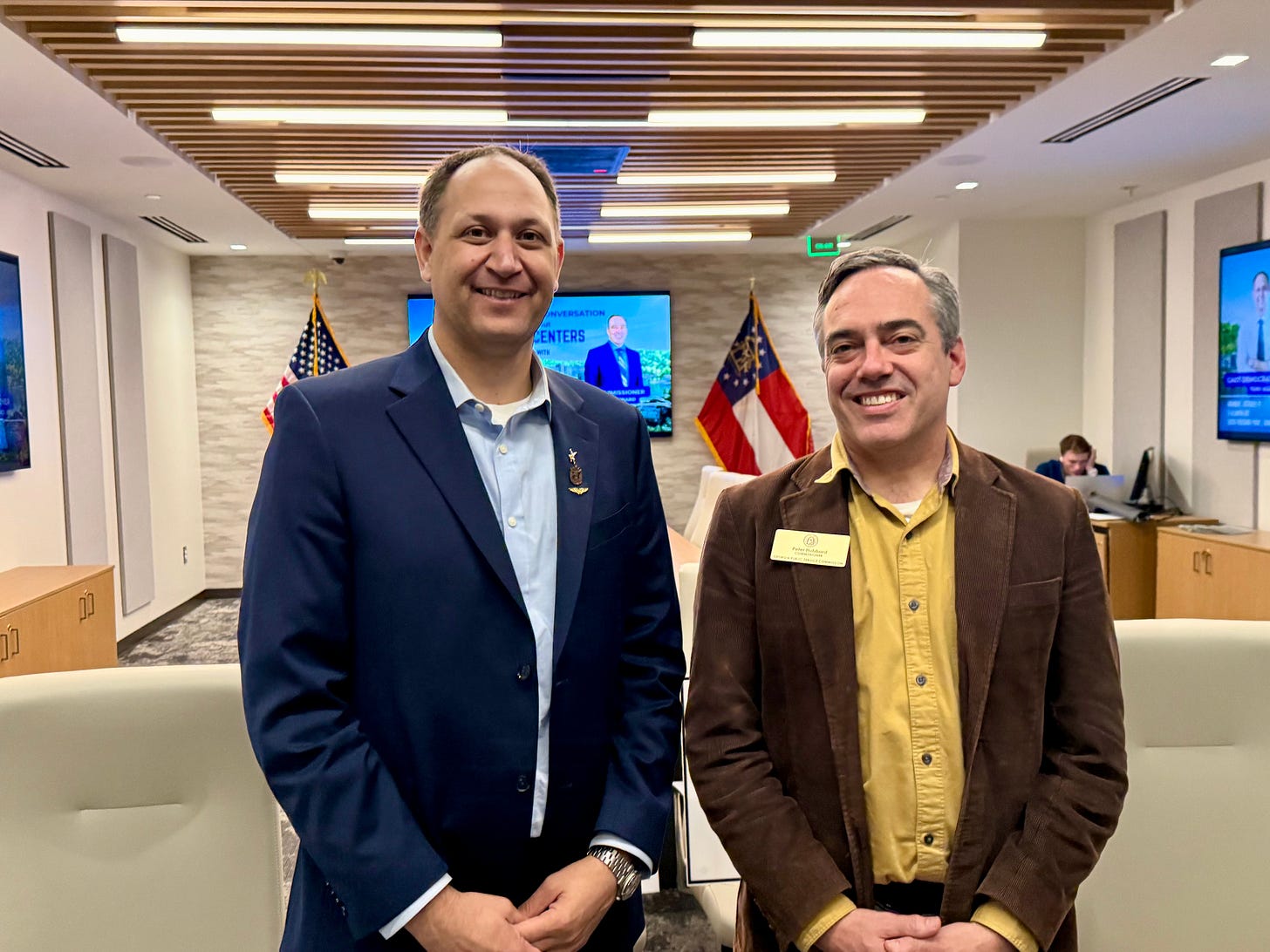
If you couldn’t make it, the full video is on YouTube:
Thanks for reading! Subscribe for free to receive new posts and support my work.
I’d encourage you to watch it. But I want to share what stuck with me, because this issue is going to shape what every family in the 7th District pays for years to come.
Let me start with where I stand. I’m not against data centers. AI is going to change the world, and I want America leading the way. I want to hand my kids a country that’s competitive. But I don’t want us racing ahead so fast that Georgia families get run over by big tech in the process. Right now, that’s exactly what’s happening.
First, what is the PSC?
Most people don’t think about the Public Service Commission until their power bill jumps. The PSC is a five-member elected body that decides how much Georgia Power and Atlanta Gas Light can charge you, and where your electricity comes from.
Power is a natural monopoly. It makes no sense to build two sets of poles and wires down your street, so we let one company do it. In exchange, we elect regulators to make sure that company doesn’t spend recklessly and stick us with the bill. Georgia Power is supposed to chase profit. That’s what corporations do. The PSC is supposed to be our voice pushing back.
We’ve been here before
Commissioner Hubbard reminded us of Plant Vogtle. The two new nuclear reactors were supposed to cost $14 billion. Depending on who you ask, they came in at $35 to $37 billion. Georgia ratepayers paid around $1,000 per household before the plant produced a single watt, and when the reactors came online, our base rates permanently went up 25%.
Ratepayers took that risk. We paid for that plant. Now Peter’s warning is that we’re taking a similar gamble again, building massive amounts of new generation for data centers on the promise that they’ll show up and stick around long enough to help pay it off.
Before Peter joined the Commission, it approved roughly 10,000 megawatts of new capacity, largely for data centers. For context, Georgia Power’s entire peak demand is about 17,000 megawatts. Another 6,000 megawatt request is coming. Peter’s independent analysis found that choosing expensive gas plants over the lowest-cost options will add around $29 billion over 21 years, in line with PSC staff estimates of $50 to $60 billion in lifetime costs. As he put it: when you’re in a hole, stop digging.
The rate freeze isn’t what it sounds like
Last year’s “rate freeze” was sold as relief. Here’s what it actually did: it locked in rates right after six increases, which by Peter’s math added about $600 a year to the average household bill. It also meant skipping the deep-dive study that determines how costs are split between residential customers, businesses, and data centers. Right now we’re basically trusting Georgia Power to decide what’s fair for data centers to pay. The next real reset comes with the 2028 rate case, with new rates taking effect in 2029, after the next election cycle.
Secret deals and towns bidding against towns
Many data center projects are negotiated under NDAs with local development authorities, so communities don’t even know what’s being proposed until it’s done. Peter wants a longer public review period for the largest contracts, room for outside scrutiny, and a vote by elected commissioners.
This is where I believe Washington has a role. Right now, counties are competing to offer the biggest tax breaks. Rich McCormick loves to brag about the deal Effingham County got. But what do families in Forsyth or Dawson County get? We helped pay for Vogtle. We’re paying for the grid. Effingham gets the property tax break, and the rest of us get the bill. We need federal guidelines so Georgia towns aren’t pitted against each other, and any federal subsidies should be tied to data centers paying for the impact they create, on the grid, on our water, and on our communities.
It’s not just energy. It’s water.
Data centers use enormous amounts of water to stay cool, and so do the gas and nuclear plants that power them. Peter made a point I hadn’t fully considered: switching to “closed loop” cooling sounds great, but it uses more electricity, and that electricity comes from power plants that use water too. You may just be moving the water use somewhere else. Here in Forsyth County, with Lake Lanier at the center of our community, that matters.
The things nobody’s talking about
Georgia Power disconnects about a quarter million residential customers a year, a rate Peter says is ten times the national average. Families are sitting at the kitchen table deciding which bill they can skip. In Congress, I’ll fight to keep LIHEAP, the Low Income Home Energy Assistance Program, fully funded.
Peter also believes many Georgians are on the wrong rate plan. Georgia Power has seven residential tariffs, and depending on how you use energy, you could be overpaying. It’s worth looking into.
And we no longer have an independent Consumer Utility Council arguing for residential ratepayers before the Commission. It was defunded during the 2008 recession. Georgia Power has 2.4 million residential customers and no one at the table with the same sophistication as the big players.
Clean energy is just good business
Texas, not exactly a liberal stronghold, regularly runs its grid on 60 to 65% solar and wind during parts of the day. Georgia already makes solar panels in Dalton and Cartersville. Solar is now among the cheapest forms of energy to build. As Peter said, we should have the right to farm the sun the same way we farm the land.
What comes next
The bottom line is simple. Without someone standing up for us, the corporation sets the terms. That’s not a knock on business. I’m a small business owner. I believe in capitalism. But capitalism works when the rules are fair, not when the costs get pushed onto families while the profits go to the biggest companies in the world.
Thank you to Commissioner Hubbard for his time and his expertise, and to everyone who joined us in person and online.
Early voting runs through October 30, and Election Day is November 3. Your vote is how we get a seat at the table. Make your plan and vote early.
▶️ Watch the full conversation:
Thanks for reading! This post is public so feel free to share it.
Thanks for reading! Subscribe for free to receive new posts and support my work.